Chill with God
The Story of Carol Hill
Download the book (PDF)A Girl on a Gravel Road

Long before there were songs on a screen, there was a gravel road.
It ran past an isolated ranch, far from neighbors, far from noise. A little girl walked it alone, and as she walked, she sang. She talked to God the way a child talks to a friend who happens to be standing just beside her. She told Him things. She sang Him things. Nobody else was there to hear, and for her that was enough.
Out there, the sky was very large and the quiet was very deep. Carol has said that remarkable things happened to her in those years. They belong to her and to God, and this book will not try to explain them. It will only say that she grew up certain of one thing: she was never really alone.
Jesus once said, "Let the little children come to me, and do not hinder them, for the kingdom of heaven belongs to such as these" (Matthew 19:14). A girl singing to God on a gravel road is exactly that kind of child. Everything else in this story grows from that road.
Always Picked Up
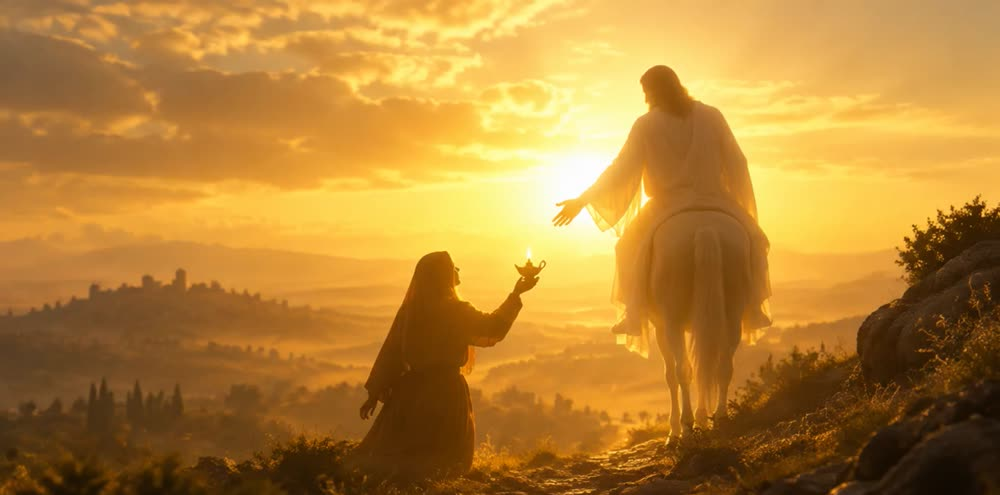
Children grow up, and roads lead somewhere. At some point the girl who sang to God began to walk away from Him.
Carol has said it plainly. She always believed in Jesus. But she drifted, sometimes a long way, and a deep emptiness settled in. Anyone who has felt that hollow place knows how heavy it is. It does not always look like rebellion. Often it just looks like busyness, or silence, or a door left unopened.
What she says about those years is the heart of this whole book: every time she left, He picked her up. He did not wait for her to clean herself up first. He did not scold her at the door.
This is the oldest story Jesus told: "While he was still a long way off, his father saw him and was filled with compassion for him; he ran to his son, threw his arms around him and kissed him" (Luke 15:20). The father in the story is always watching the horizon, and so was the One who watched for Carol.
The promise in Hebrews 13:5 is for people exactly like her: "I will never leave you nor forsake you." Carol did not just read that promise. She lived it, more than once.
Healing and Forgiveness
Coming home was not simple. Carol describes a time of painful healing, and she says that God was there through all of it.
Healing is rarely tidy. It asks a person to stay with what hurts long enough to let it change. For Carol it also meant forgiveness.
Forgiving is a choice, and Scripture does not pretend it is easy: "Bear with each other and forgive one another if any of you has a grievance against someone. Forgive as the Lord forgave you" (Colossians 3:13). She did not do it in her own strength.
"He heals the brokenhearted and binds up their wounds" (Psalm 147:3). The wounds did not disappear overnight, but they were bound, and much of the compassion she gives others today grew from that binding.
I Am Worthy of You: Out of the Prison


There was a season in Carol's life when she felt shut in, like a prison with nowhere to turn. It was a hard and painful time, and she does not pretend otherwise.
What held her was love for the people around her. She says she finally healed through the grace of God. Not quickly, and not by her own effort.
Years later, words poured out of her: "I've purged my soul for you, Lord. Lord, I know now I am worthy of you now. For so long I had no clue. The devil would remind me of something I thought, did or said to come between us. I would feel so unworthy that I distanced myself from you. Lord, it's been a battle. You came and suffered for me. I thank you, Lord, because there is no way out but with you. Help me, Lord Jesus, to go on through all with you."
Those words became the song "I Am Worthy of You," with a strong, gritty rock sound and a man's voice. It is the sound of walking out of a prison.
The song does not say she earned her way out. It says she stopped believing the voice that kept her feeling unworthy, and came back to the One who suffered for her. "There is now no condemnation for those who are in Christ Jesus" (Romans 8:1).
If you are in a dark place today, hear this: "He brought me out into a spacious place; he rescued me because he delighted in me" (Psalm 18:19).
Family and Faith
For more than forty years, Carol has been a wife, and she is also a mother and a grandmother. Faithfulness is the word the Bible uses for that kind of long, steady love.
Her family is small, and she holds it close. Some of her songs are written for the people she loves, and she prays for them often.
Family is where faith becomes ordinary and real. It does not stay in songs and verses. It shows up as prayer, and as steady love through the years. "Children's children are a crown to the aged" (Proverbs 17:6).
Her Garden
Carol loves yard work, flowers and plants. Some people see a garden as a chore. She sees it as company.
A gardener learns lessons that no sermon can teach as well. You can dig, plant and water, but you cannot make a seed grow. You can only get the soil ready and trust. Some seasons look bare. Roots are working under the ground where nobody can see. Then one morning there is a bloom, and it seems like a small miracle, because it is one.
Paul wrote, "I planted the seed, Apollos watered it, but God has been making it grow" (1 Corinthians 3:6). That is how Carol lives, whether she is tending a flower bed or tending a ministry. She does what she can. She leaves the growing to God.
There is something else a garden teaches. Plants seem to fail and then return. A winter-brown stalk comes back green in spring. For a woman who knows what it means to drift away and be brought back, this is more than scenery. Her garden is her own testimony, written in leaves.
Jesus said, "See how the flowers of the field grow... not even Solomon in all his splendor was dressed like one of these" (Matthew 6:28-29). Carol seems to understand this without being told. There is beauty that asks for nothing, and God puts it right where we can see it.
The Heart for Children
Carol cares deeply about children with disabilities, and she loves to teach about Jesus. These two loves meet in one place.
Carol cares deeply about children with disabilities, and she knows how much patience, love and prayer it takes to stand beside a person who needs extra care. Jesus noticed the people nobody else bothered to notice, and she has the same instinct.
Out of that care came Chill with God, at chillwithgod.com: daily verses, prayers and readings, short videos about Jesus, and retellings of Bible stories. The name is easy and gentle, and it says what she wants others to feel. Nobody has to perform for God. They can simply be with Him, the way a little girl once was on a gravel road.
"Whoever welcomes one of these little children in my name welcomes me" (Mark 9:37). She did not wait to become an expert, and she did not wait for an organization to back her. She started with what she had, which was a faith that had been tested and a heart that would not look away.
I believe the best of what she gives is not the content. It is the tone: warm, plain and unhurried, the voice of a woman who has been rescued and wants to say so kindly.
Songs from the Heart

Carol had been teaching and sharing for a while when something new opened up: she wanted to write songs.
They are her own songs, built from her own words and ideas, and she hopes someday to release them on streaming services.
"Be With Me Now" is a prayer for Jesus to stay close. It comes from the emptiness she once knew and the hope she found after it. "Chosen Before the Dawn" carries the theme of being known before you could do anything to earn it.
"I Am Worthy of You" has its own chapter, because of where it came from.
Read in order, the songs tell the same story as this book: the plea of the one who feels alone, the discovery of being chosen, and the quiet courage of worth. They are prayers, set to music.
The Scriptures She Returns To

Carol shares verses and prayers every day, and a weekly series on the women of the Bible. Choosing what to share says as much about a person as anything she writes.
Her life keeps circling a few truths. The first is that God is near to the broken: "The Lord is close to the brokenhearted and saves those who are crushed in spirit" (Psalm 34:18). The second is that He knows us before we do anything: "Before I formed you in the womb I knew you" (Jeremiah 1:5).
The third is that His faithfulness does not run out: "Because of the Lord's great love we are not consumed, for his compassions never fail. They are new every morning; great is your faithfulness" (Lamentations 3:22-23). A woman who has been picked up again and again can say amen to that.
The fourth is that forgiveness is possible: "Bear with each other and forgive one another if any of you has a grievance against someone" (Colossians 3:13). The fifth is that her family is held: "The Lord will watch over your coming and going both now and forevermore" (Psalm 121:8).
Notice how the women of the Bible fit here. Ruth chose to stay. Hannah prayed for a child. Mary said yes. Each of them knew what it was to wait, to trust and to be carried. Carol shares their stories because she knows what it is to be carried.
Who She Is
This chapter is a reflection, based on what Carol has shared and on the work she has asked for help with.
She is faithful. Forty years of marriage and a faith that survived years of distance say so. She is a forgiver. She is a giver whose first instinct is to pray for people. She is plain-spoken and likes real words better than fancy ones.
She is brave, though not loudly. Starting a ministry, then songs, then videos takes courage at any age, and she keeps going with patience.
In one sentence: a child of God who knows she was found, and who spends her days helping others feel found too.
What God May Be Preparing

No one can see the future, and this chapter does not pretend to. What it offers is hope, which is different from a prediction. Hope is looking at what God has done and what He has promised, and then leaning forward.
Her songs may reach someone sitting in the same emptiness she once knew, and that person may realize Jesus has been near all along. Her daily verses and prayers may become a small, steady place for people to rest.
The girl on the gravel road never stopped singing. She only went quiet for a while. There may be more songs in her yet.
"For I know the plans I have for you, declares the Lord, plans to prosper you and not to harm you, plans to give you hope and a future" (Jeremiah 29:11).
A life this faithful tends to bear fruit. The harvest is in God's hands.